
.png)
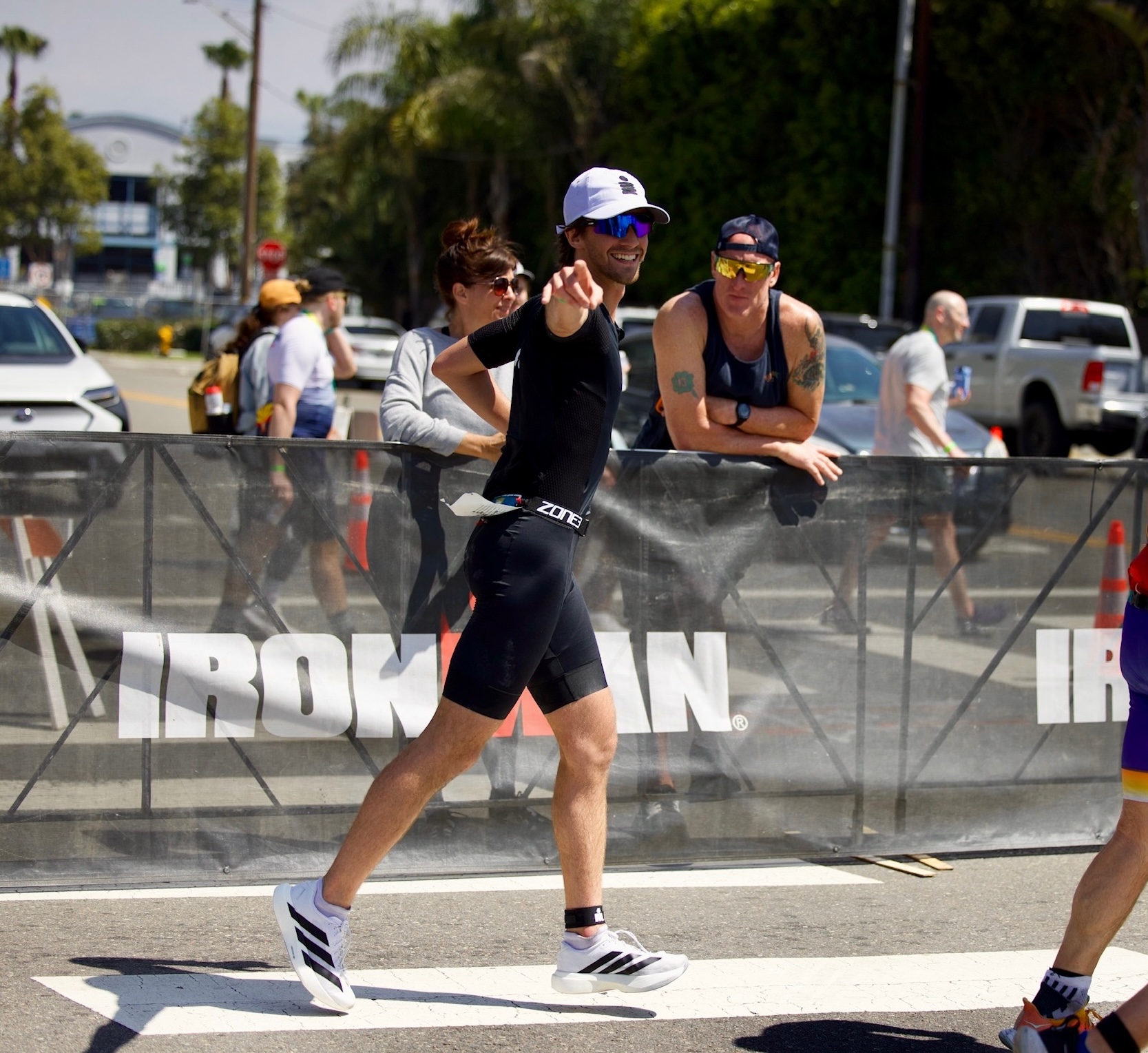
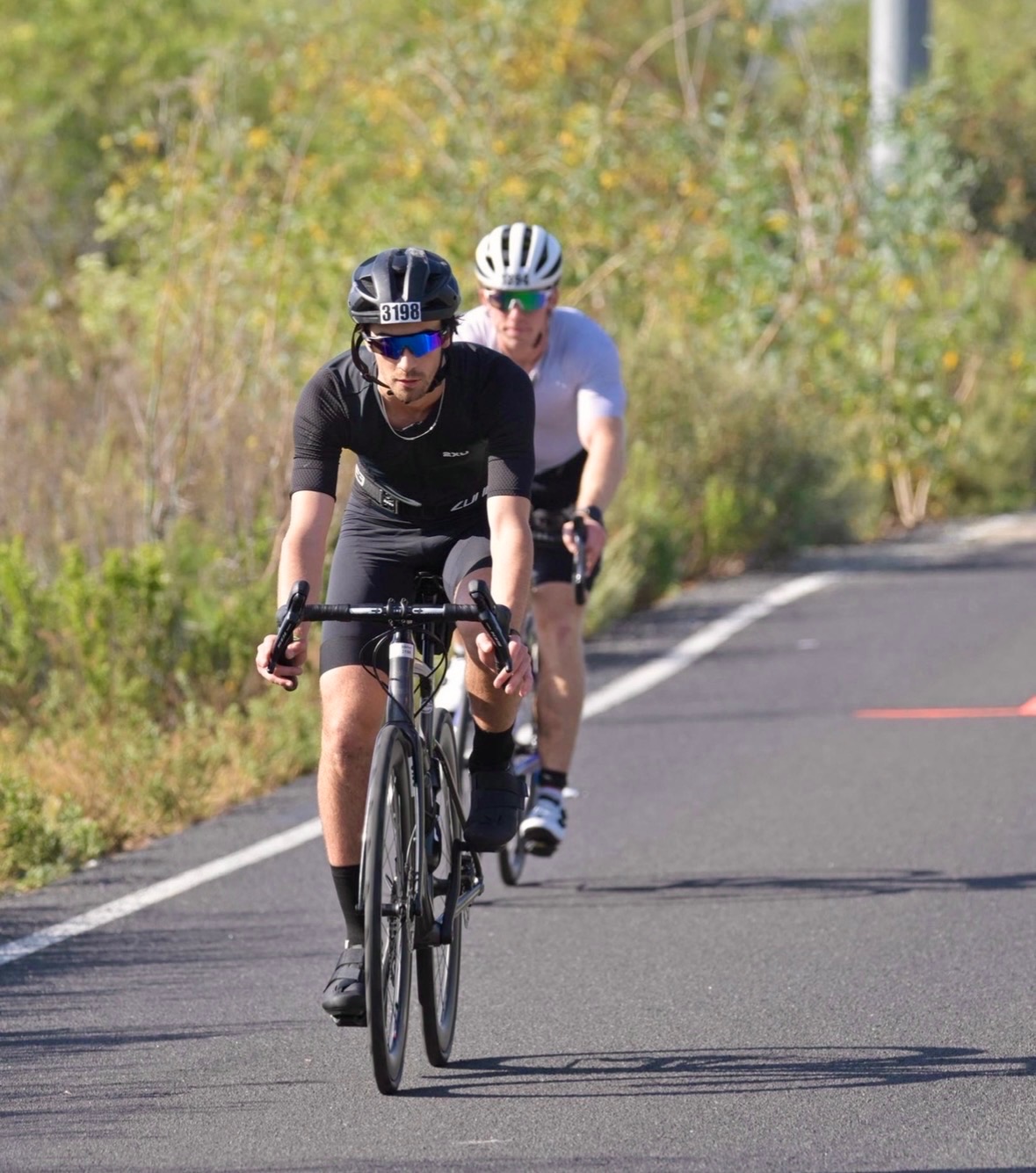
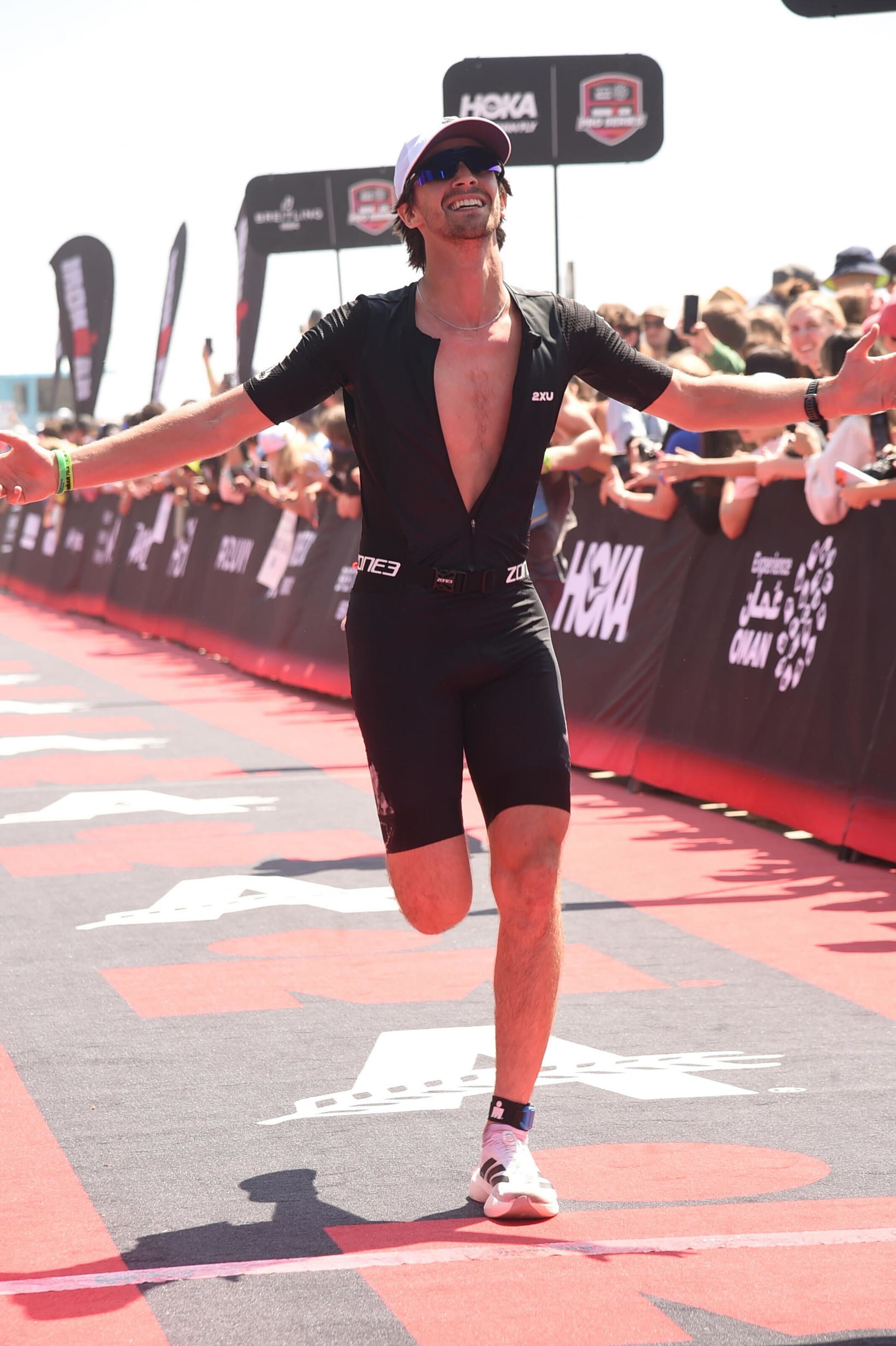
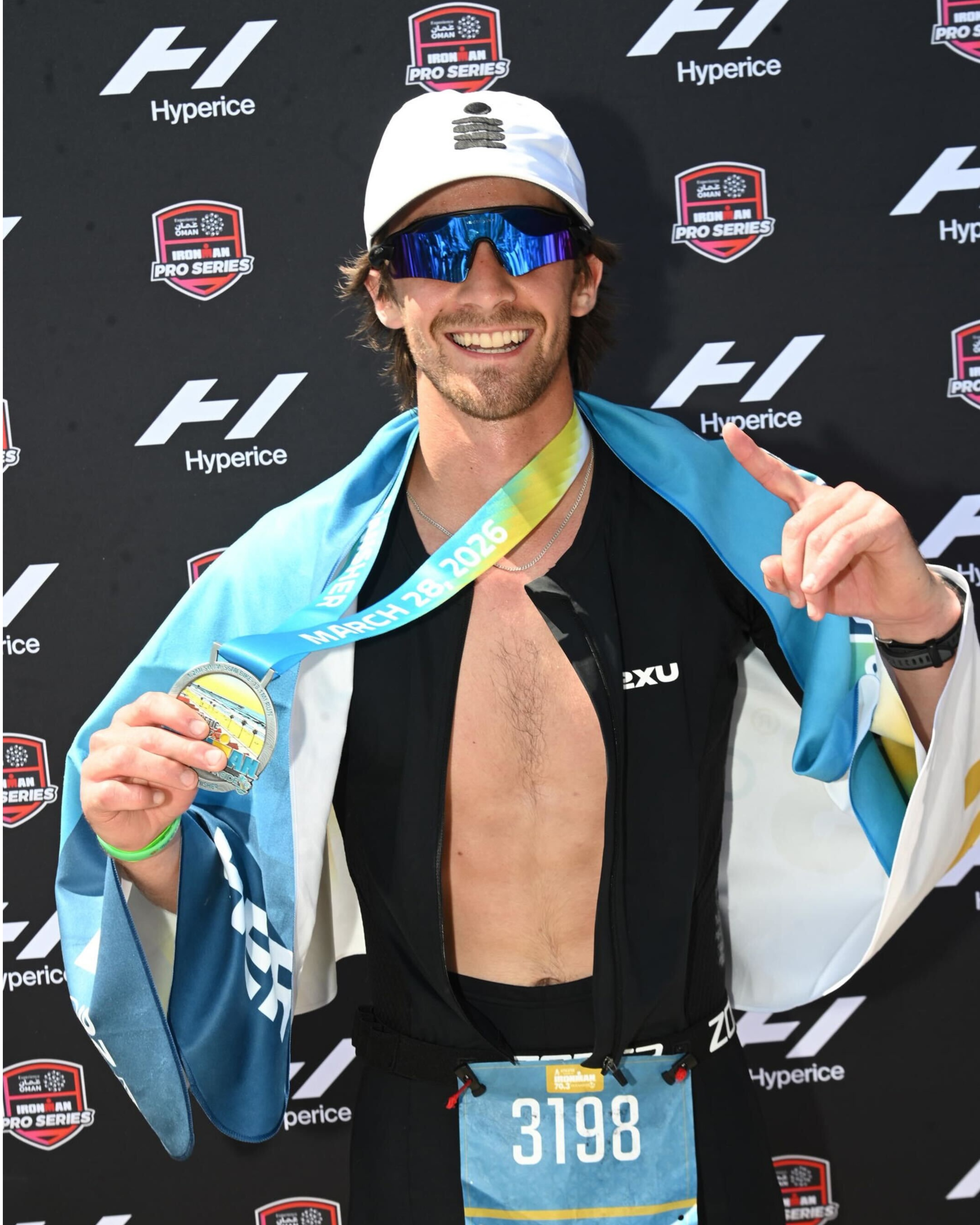
Last summer, Joseph had never swum a lap with purpose, never clipped into a road bike, and had barely laced up running shoes outside of hockey training. By March of this year, he crossed the finish line of a half Ironman. That's 1.2 miles in open water, 56 miles on the bike, and 13.1 miles on foot. By any measure, it’s an incredible athletic feat.
If you ask Joseph what the race was really about, he’ll tell you it was never just physical, and that, in many ways, he had already finished it long before he ever reached the starting line.
“Mentally, I’m done. I’ve finished the race so many times in my mind. I’ve seen myself cross that line, so there’s no way I don’t finish this thing.”
From Concussions to the Starting Line
Joseph's path to endurance sports didn't begin with a bold goal. It began with an ending.
After his sixth concussion in a car accident following his last college hockey game, Joseph had to stop. No more contact sports, and no more ice. During his recovery, which included weeks of physical therapy, chiropractic work, and time away from school, he found himself drawn to content online about running and the triathlon community, specifically the Ironman.
Once he was cleared for light activity in May, Joseph started running. In early July, he ran his first half marathon, and then immediately injured his knee.
So he got in the pool and got on a bike.
"I had my dad's hand-me-down gravel bike from years ago. I had pool goggles from the pool I was going to. I had no idea what I was doing. I was swimming laps and I couldn't breathe for longer than 25 yards."
He liked that about it. "I knew that this really only goes up from here."
Throughout September, he was training with real intent. At the end of September, he signed up for the Half Ironman, having virtually zero triathlon experience behind him.
Training Through the Hard Stuff
Joseph's early training was intense. He trained eight to ten hours a week across all three disciplines, meticulously tracked in a spreadsheet he built himself. But life had other plans.
Exam weeks chipped away at his routine. A trip to Colorado. Then, in November, his grandmother passed away. He flew home to see family and came back to training that had dwindled from eight hours a week down to two or three.
The real doubt didn't hit him in November, though. It came in mid-February, on a flight back after visiting home, about 50 days out from race day.
"I had this day tracker on my wall, and it became kind of negative. It was almost more of, ‘how many days do I have left,’ rather than ‘how many days do I have left until I get my reward.’"
On that flight, he called a close friend, someone he describes as “very grounded in the mental side of performance”. That friend told him to stop looking backward. Focus on what you can do from here. Then he said something Joseph kept coming back to time and time again: “the months you've already put in are still there. Every hour counts”.
Joseph built a five-week spreadsheet mapping every session between that moment and race day and he got to work.
The Mental Training No One Sees
Here’s what didn’t make it into the training spreadsheet: the journaling. The mantras. The visualization.
On training runs, Joseph would picture himself crossing the finish line. On plane rides and just before bed, he rehearsed how race day would feel. Before dragging himself into a cold pool after a long day, he had already been there in his mind.
He’d already done the work. He’d already pushed through.
Twenty days before the race, he opened his journal and wrote the same words over and over:
I'm going to conquer the swim. I'm going to conquer the bike. I'm going to conquer the run. I am mentally already a finisher.
He references the concept of his inner critic vs. his true self. His inner critic being the over-analytical, overcritical voice, and his true-self being the performer who simply flows. The mantras, the journaling, the repetition, all of it was practices for quieting his inner critic.
"By repeating these things, you train your inner voice the same way you train a muscle," he says. "You get out of your own way. That's the best way I can put it."

.png)